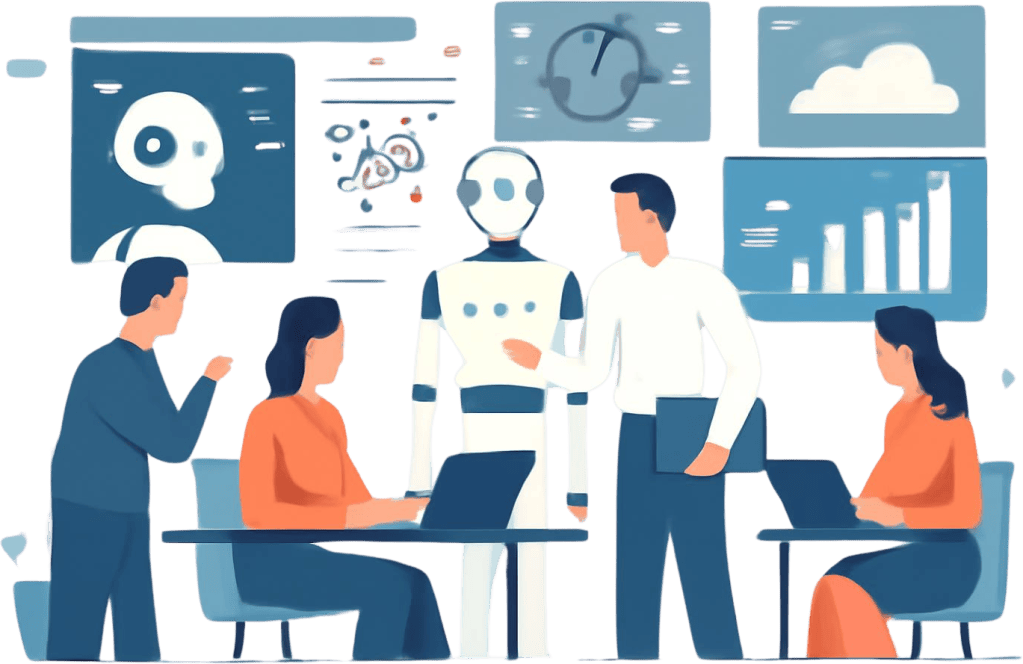
For years, organizations have approached compliance with a relatively straightforward assumption: software is a tool. Employees decide what data to access, when to access it, and how to use it, while software simply executes those instructions.
Compliance programs, privacy policies, and vendor agreements have all been built around that model.
AI agents, however, challenge that assumption.
Unlike traditional software or even generative AI tools that respond to prompts, AI agents are designed to pursue objectives with a degree of autonomy. Once assigned a goal, they can plan how to achieve it, gather information from multiple systems, make decisions, trigger workflows, and complete tasks with minimal human intervention.
Rather than waiting for step-by-step instructions, they determine the sequence of actions needed to accomplish an outcome.
As businesses rush to integrate AI agents into customer support, finance, HR, legal, healthcare, and operations, are also inheriting a new category of compliance risk; one that existing governance frameworks were never designed to address.
From Software That Assists to Software That Acts
Every major wave of enterprise technology has automated work in some way. Customer relationship management systems automated sales records. ERP platforms automated business operations. Robotic process automation automated repetitive tasks. More recently, generative AI automated content creation.
AI agents represent the next stage of that evolution.
Instead of helping an employee complete a task, an AI agent may complete the task itself.
Consider a customer support agent tasked with resolving refund requests. Rather than waiting for a human to review each ticket, the agent may search previous conversations, retrieve transaction records, verify company policy, calculate refund eligibility, communicate with payment systems, send confirmation emails, and update internal records, all without requiring another prompt.
The same pattern is emerging across industries. HR agents screen resumes and schedule interviews. Finance agents reconcile transactions and flag anomalies. Healthcare agents coordinate appointments, analyze patient records, and assist with administrative workflows. Sales agents qualify leads, prepare proposals, and update CRM records.
Each of these activities involves the continuous processing of personal information. That is precisely where compliance becomes more complex.
Why AI Agents Create New Privacy Challenges
Most privacy frameworks were developed around systems that behaved predictably. A database stores information. An application retrieves it when requested. A user determines when and why processing occurs.
AI agents introduce a different model.
Because they are designed to pursue goals autonomously, they continuously decide which information to retrieve, which systems to access, and which actions to perform. Their effectiveness often depends on having broad access across an organization’s digital environment.
From a business perspective, this is exactly what makes AI agents valuable.
From a compliance perspective, it creates new questions.
How much access should an AI agent have? Can it retain information from previous tasks? Is it permitted to use customer data to improve future performance? How should organizations explain decisions made by adaptive systems whose reasoning evolves over time?
These are no longer theoretical questions. They are rapidly becoming operational ones.
The Compliance Risk Isn’t AI, It’s Autonomous Data Processing
One of the most important insights emerging from recent law reviews is that organizations should stop thinking about AI agents as simply another software tool.
Instead, they should think of them as continuous processing activities.
This distinction matters because privacy laws regulate the processing of personal data, not the technology itself.
Every time an AI agent accesses employee records, searches customer emails, analyzes financial information, generates recommendations, or communicates with external systems, it is processing personal data.
Unlike traditional automation, these activities may occur continuously, adapt to changing circumstances, and involve multiple interconnected systems.
That means organizations must evaluate AI agents against core privacy principles such as purpose limitation, data minimization, lawful processing, transparency, storage limitation, and accountability.
Deploying an AI agent therefore becomes more than a technology decision. It becomes a compliance decision.
Existing Vendor Agreements Were Not Written for AI Agents
Many organizations assume that if they already have a Data Processing Agreement (DPA) with a software vendor, they are adequately protected.
In many cases, they are not.
Traditional DPAs were drafted for software that processed data in predictable ways. They typically address confidentiality, security obligations, breach notification, data deletion, and restrictions on subcontractors.
AI agents introduce entirely new considerations.
Organizations now need to understand whether vendors use customer data for model training, whether AI agents retain long-term memory, how decisions are logged, how personal data is deleted from embeddings or memory stores, which subprocessors receive data, and what controls exist to prevent unauthorized actions.
Without addressing these issues contractually, businesses may unknowingly expose themselves to regulatory and operational risk.
Regulations Are Already Catching Up
Contrary to popular belief, businesses do not need to wait for entirely new AI laws before addressing these risks.
Existing regulations already apply. Depending on your jurisdiction and industry, this may include:
- GDPR
- CCPA/CPRA
- HIPAA
- GLBA
- FERPA
- sector-specific AI regulations
- the EU AI Act
Newer legislation such as the EU AI Act introduces additional obligations around transparency, documentation, risk management, and human oversight for high-risk AI systems.
Rather than creating an entirely separate compliance framework, these laws extend existing principles into increasingly autonomous environments.
The challenge for organizations is interpreting those principles in systems that can independently plan, adapt, and execute tasks.
Governance Will Become the Competitive Advantage
Organizations often ask whether AI agents can automate a particular workflow.
A more important question is whether the organization has the governance structures needed to deploy those agents responsibly.
Before introducing AI agents into business-critical processes, organizations should establish clear policies around data access, role-based permissions, audit logging, vendor management, human oversight, incident response, and ongoing monitoring.
Privacy impact assessments and AI risk assessments should become standard practice, particularly for workflows involving sensitive personal information or significant business decisions.
This approach should not be viewed as slowing innovation. On the contrary, strong governance enables organizations to scale AI adoption with confidence while reducing legal, operational, and reputational risk.
Looking Ahead
AI agents are likely to become embedded across virtually every business function over the next few years. As their capabilities expand, so too will the expectations placed on organizations deploying them.
Compliance is no longer just about protecting stored information. It is increasingly about governing autonomous systems that continuously interact with personal data on an organization’s behalf.
Businesses that continue treating AI agents as ordinary software may find their existing privacy controls, vendor agreements, and governance frameworks increasingly inadequate.
 blog.tryvarsi.com
Leave a comment