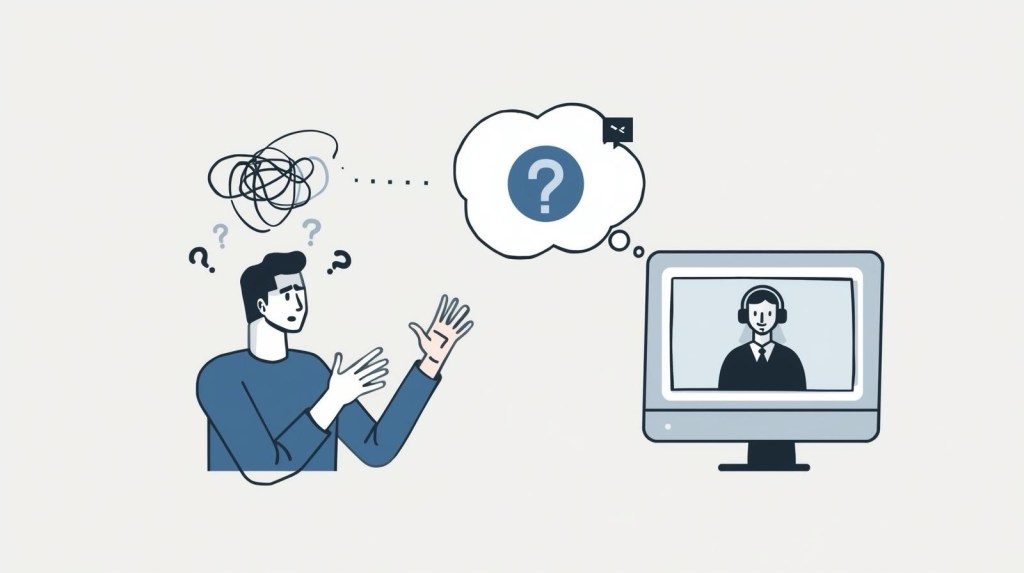
There is a very specific kind of energy drain that comes from dealing with customer service these days. The kind of energy drain that sets in after you’ve explained the same problem three times, to three different people, across three different channels, only to be told cheerfully that someone will “get back to you.”
They don’t.
First, there’s the chatbot…it greets you like an over-enthusiastic intern, confidently misdiagnoses your problem, and offers you a FAQ you’ve already read. When that fails, you escalate to email, where your issue is acknowledged, numbered, and quietly abandoned.
Then comes the phone call; hold music, apologies delivered in perfect corporate English, and the now-familiar instruction to “allow 24 to 48 hours.” Time passes. Nothing changes.
This is modern customer service everywhere – automated and politely indifferent. A maze of tools meant to reduce friction that somehow creates more of it. And while companies marvel at their omnichannel strategies and AI rollouts, customers are left wondering how something so sophisticated can feel so deeply ineffective.
What Is the Real Cost of Bad Customer Service for Your Business?
Customer rage is now at record highs, and it is not abstract. In the United States alone, unresolved service issues put $494 billion at risk every year.
Not because companies make mistakes (customers expect those), but because companies fail to close the loop. The damage happens in the waiting. In the “we’ll get back to you.” In the third follow-up, that changes nothing.
Almost two-thirds of customers experience a service or product problem each year, and most of them don’t describe their reaction as mild annoyance. They describe it as anger. Once, complaining was a sign of loyalty. Customers raised issues because they believed the relationship was worth saving. That era is over. Today, complaining is often the final act before departure.
And departure is swift. Ninety-six percent of customers are willing to switch brands after bad service. Not catastrophic service. Just bad. Which means in practice, the competitive edge now belongs to the company that is simply the easiest to deal with.
The real cost of bad customer service isn’t just lost revenue. It’s the gradual erosion of trust, reputation, and the belief that engaging with your company is worth the effort. Once these are gone, no amount of cheerful hold music or polite apologies will win customers back.
What Are the Most Common Customer Service Mistakes?
The most common customer service mistakes span communication, human behavior, and organizational priorities:
1. Poor Communication
One of the most underestimated mistakes is failing to communicate changes clearly. Whether it’s a new app, a revised return policy, or a tech migration, customers expect to know what’s happening, why, and how it affects them. Poor communication isn’t just inconvenient; it’s expensive. Studies estimate that unclear messaging costs U.S. businesses up to $1.2 trillion annually. Silence breeds confusion, frustration, and ultimately, churn.
2. Ignoring the Human Element
Modern customers are not transactions; they are people. Transformations can be stressful, leaving customers anxious or uncertain. Organizations that fail to acknowledge the emotional journey miss a crucial lever for loyalty. Harvard Business Review research shows that understanding and addressing emotions predict future customer behavior better than satisfaction scores alone. Empathy is a competitive edge.
3. Forgetting Your Loyal Base
While chasing shiny new customers is tempting, neglecting existing ones can be catastrophic. Retaining a loyal customer is far more profitable than acquiring a new one: even a 5% improvement in retention can grow profits by 25–95% over time. Legacy customers aren’t passive consumers; they are advocates, brand ambassadors, and a stabilizing force during transitions.
4. Overemphasis on the Wrong Metrics
Internal efficiency metrics, speed of rollout, and cost reduction are seductive, they look good on spreadsheets, but they do not reflect the customer experience. Customers care about first-contact resolution, response time, and effort required. Optimizing the wrong metrics can make a company appear efficient internally while alienating the very people it depends on externally.
5. Undertraining Your Frontline
Your service agents are the face of your company. If they aren’t equipped with the knowledge, tools, and confidence to resolve problems, every interaction increases customer effort. Undertrained teams inadvertently amplify friction, spread misinformation, and degrade trust. Empowered, knowledgeable agents, on the other hand, turn frustration into loyalty and customers into advocates.
6. Disregarding Cross-Channel Cohesion
Customers interact across multiple channels, phone, email, chatbots, social media, and expect seamless resolution across all of them. Fragmented support that passes customers from one channel to another without resolution fuels what researchers call “customer rage,” which costs businesses billions annually.
What Are the Types of Customer Service?
Customer service often fails because companies confuse having many channels with having a functioning system. When leaders treat channels as interchangeable, or worse, deploy them primarily to deflect volume instead of resolve problems, the experience collapses.
With that said, here’s a breakdown of the most impactful types:
- Phone Support: The classic one-on-one conversation that never goes out of style. For complex issues or high-emotion interactions, hearing a human voice still matters. It offers immediacy, nuance, and empathy.
- Email Support: Slow-motion but substantive, emails let customers explain their issue in their own words, attach evidence, and create a documented thread that teams can reference. It’s ideal for detailed problems, escalations, and situations that don’t require instant response.
- Live Chat: Think of this as the digital equivalent of walking up to a service desk in a store. Instant, flexible, and right there while the customer is already on your site or app. Live chat blends speed with real-time human interaction and is rapidly becoming a customer favorite.
- AI-Powered & Automated Support: Chatbots and automated assistants handle routine questions without keeping humans up past midnight. When done well, they answer FAQs instantly and hand off complex cases to human agents, making life easier for both sides.
- Social Media Support: Customers don’t go to social channels just to browse memes anymore; they raise issues publicly now. Responding quickly and gracefully here protects brand reputation and shows the world you actually care.
- Self-Service Customer Support: Some customers prefer to fix things on their own time. FAQs, knowledge bases, and help portals empower users to find answers without waiting, cutting down support volume while increasing satisfaction.
- In-Person or On-Site Support: For certain industries, think tech hardware, luxury services, or high-touch retail, nothing beats face-to-face help. On-site technicians, store representatives, and in-person assistance resolve issues that no amount of typing can fix.
- Community Forums & Peer Support: Sometimes, your best customer service comes from your customers. Forums where users help one another not only lightens the load on your support team but also builds a sense of community and advocacy around your brand.
What Skills Should Every Customer Service Rep Be Trained On?
Top 6 skills every customer service rep actually needs to be trained on in practice.
1. Product Knowledge
Nothing erodes trust faster than a representative who sounds unsure about the very thing they’re meant to support. Product knowledge isn’t about memorising manuals; it’s about understanding the product well enough to diagnose problems without deflection.
Well-trained teams shorten resolution times simply because they don’t need to guess.
2. Empathy
Empathy is often treated as a personality trait rather than a trainable skill. That’s a costly mistake. Research cited in the Guardian shows that many complaints can be defused by something as simple as being heard, acknowledged, and treated with dignity.
A spa voucher, a sincere apology, or a proactive gesture doesn’t just soothe emotions; it preserves loyalty.
Huntswood’s data makes this plain: three-quarters of customers who feel their complaint was satisfactorily handled stay. Empathy, in other words, is not kindness for its own sake. It’s a retention strategy.
3. Effective Communication
Customers don’t get angry because something went wrong. They get angry because they’re forced to retell the same story across multiple channels, each time with diminishing hope.
Effective communication training teaches reps how to:
- Ask the right questions early
- Explain delays honestly, not vaguely
- Set expectations that they can actually meet
It replaces corporate vagueness (“we’re looking into it”) with clarity (“here’s what’s happening, here’s why, and here’s when you’ll hear back”).
4. Resourcefulness
Many customer service failures aren’t caused by lack of effort, but lack of authority. Reps know what would fix the problem, but policy won’t let them.
Timpson’s “upside-down management” model is instructive here. Staff are trusted to follow their instincts, waive fees, and offer goodwill gestures of up to £500 when necessary. The result is faster resolution, happier customers, and employees who feel accountable rather than constrained.
Training on resourcefulness means teaching reps how to make judgment calls, not just how to follow scripts.
5. Problem Solving
Poorly trained teams focus on closing tickets. Well-trained teams focus on eliminating repeat problems.
Problem-solving training equips reps to:
- Identify patterns in complaints
- Escalate systemic issues, not just individual cases
- Feed insights back into product, operations, or policy decisions
This is where customer service becomes a strategic asset instead of a cost centre, a source of intelligence rather than noise.
6. Customer Relationship Management (CRM)
A CRM system is only as good as the way it’s used. When agents aren’t trained to log context properly, review history, or connect previous interactions, customers feel invisible.
Good CRM training ensures that:
- Customers don’t have to start from zero every time
- Context travels across channels
- The company remembers what the customer has already endured
In an era where customers compare every interaction to the best service they’ve ever received, not just your competitors, this kind of continuity isn’t impressive. It’s expected.
Where Training, Clarity, and Execution Finally Meet
Customer service breaks when reps are forced to guess. Guess what your policies are. Guess how much discretion they have. Guess whether this is “one of those cases.”
Multiply that uncertainty across teams and channels, and inconsistency becomes inevitable.
Varsi removes the guesswork by giving teams:
- Role-specific training paths, so targeted learning happens
- A single, searchable source of truth for policies and processes
- AI-powered quizzes that test real understanding, not checkbox completion
- A free training library of essentials, covering the fundamentals teams need
- Built-in reinforcement, so knowledge doesn’t disappear after day one
- Visibility into readiness, so leaders know what teams understand, and don’t
When clarity is operational, execution becomes consistent. See how Varsi helps teams stay prepared…
 blog.tryvarsi.com
Leave a comment